Why foam reduces detergent consumption
Detergent foam is not just a more visible application method: in many professional applications it can help optimise consumption, improve surface coverage and increase the product contact time.
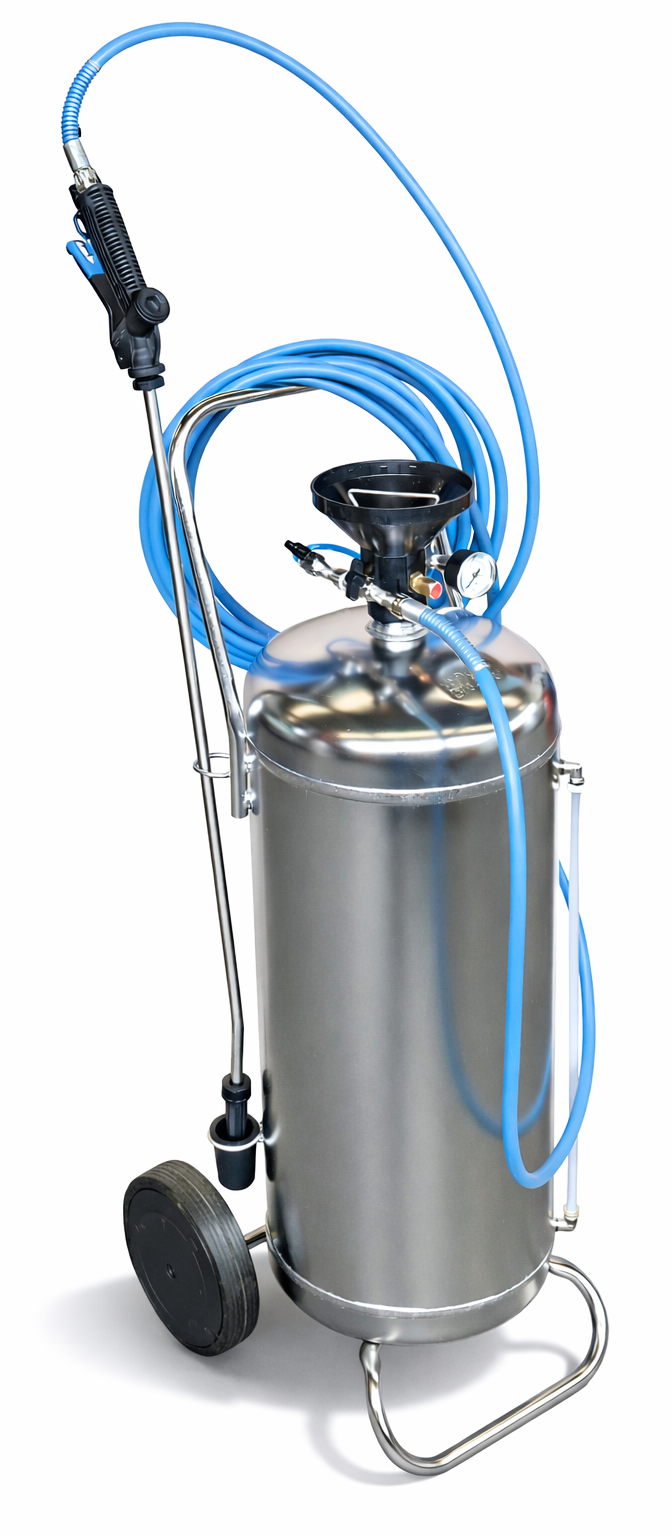
Mr Foam’s tip
Foam adheres better and works longer on the surface.
When a detergent is applied in foam form, it tends to remain on the surface longer compared to a sprayed or traditionally applied liquid. This means the product has more time to act on dirt, dissolve residues and improve the cleaning result.
In many situations, thanks to this longer dwell time and more controlled coverage, it is possible to avoid over-application and reduce run-off. The result is a more rational use of detergent, with less waste and greater efficiency.
How foam helps reduce consumption
It stays on the surface
Foam adheres better even on vertical or irregular surfaces. This reduces the rapid run-off of the product and allows the detergent to work longer exactly where it is needed.
It covers more evenly
Properly adjusted foam makes it easier to see where the product has already been applied. This helps avoid unnecessary overlaps and allows the detergent to be distributed more evenly.
It reduces waste
Less run-off, better dwell time and more controlled application mean less product dispersion, especially in repetitive professional applications.
Practical comparison: liquid vs foam
| Parameter | Liquid application | Foam application |
|---|---|---|
| Product visibility on the surface | More limited | More visible and easier to control |
| Contact time | Shorter, especially on vertical surfaces | Longer dwell time on the surface |
| Risk of run-off | Higher | Generally lower |
| Coverage uniformity | Highly dependent on the operator | Easier to control visually |
| Consumption optimisation | More difficult | More favourable in many applications |
The main advantages of detergent foam
Longer action time
Foam tends to remain in contact with dirt for longer, increasing detergent effectiveness without necessarily increasing the applied quantity.
Immediate visual control
Clearly seeing where the foam is present helps the operator cover the whole surface without unnecessarily going over the same areas again.
Less dispersion
Compact, well-adhering foam reduces product dispersion and limits waste caused by rapid run-off.
Better operating efficiency
In many professional sectors, foam allows work to be carried out in a more orderly, uniform and repeatable way, with concrete benefits in terms of time and consumption.
Two different ways to apply the product

Spraying
This is suitable when a fine, fast and light liquid distribution is needed. It may be appropriate for many applications, but the product generally tends to run off more quickly, especially on vertical surfaces.
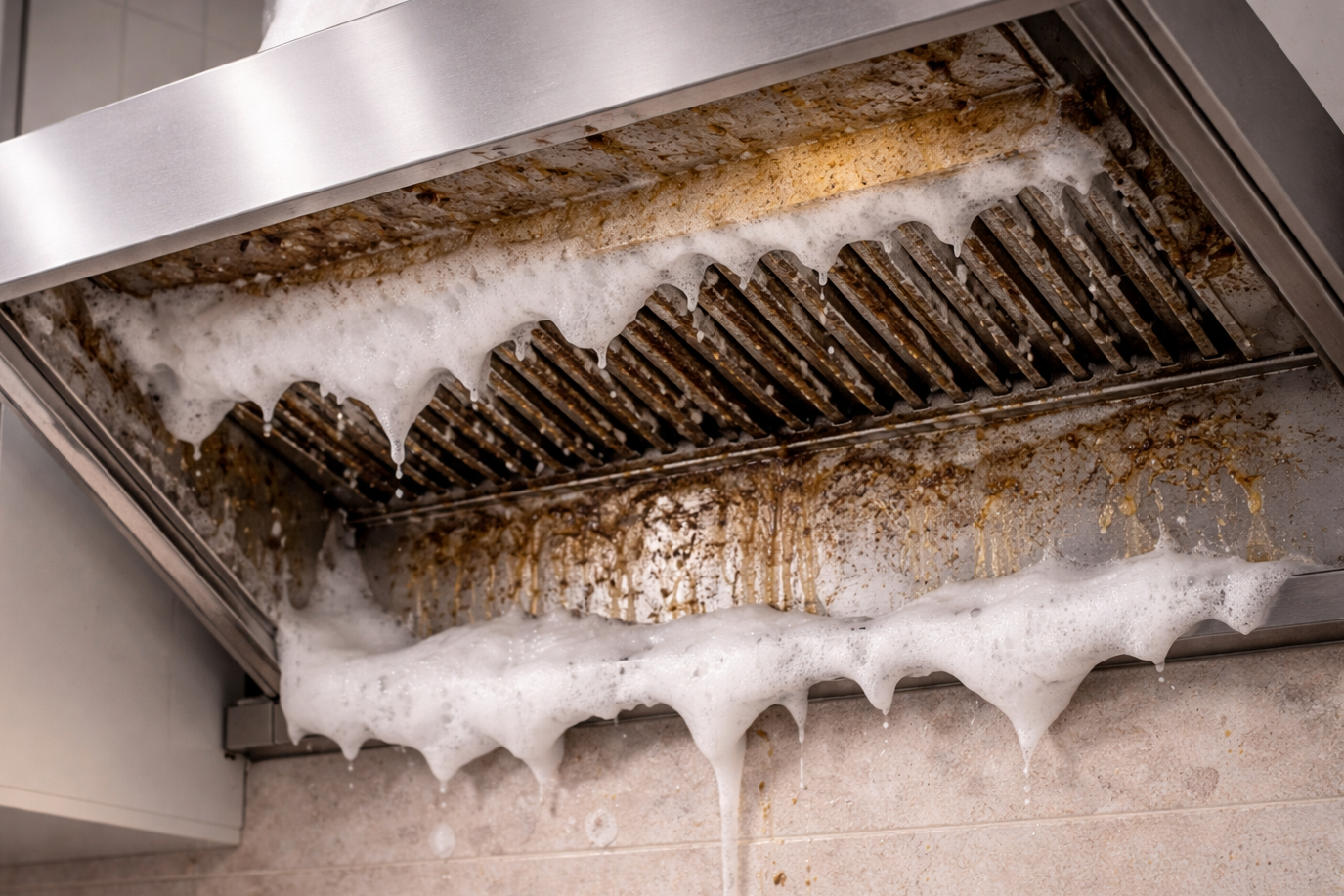
Detergent foam
This is the ideal solution when greater adhesion, better product visibility and longer contact time are required. For this reason it is often preferred in professional applications.
Where foam offers the greatest advantages


Would you like to know which foamer is best suited to your application?
Tell us the sector of use, the type of detergent and the surface to be treated: we will help you choose the most suitable solution to obtain effective foam and optimise consumption.