
How a pneumatic foamer works
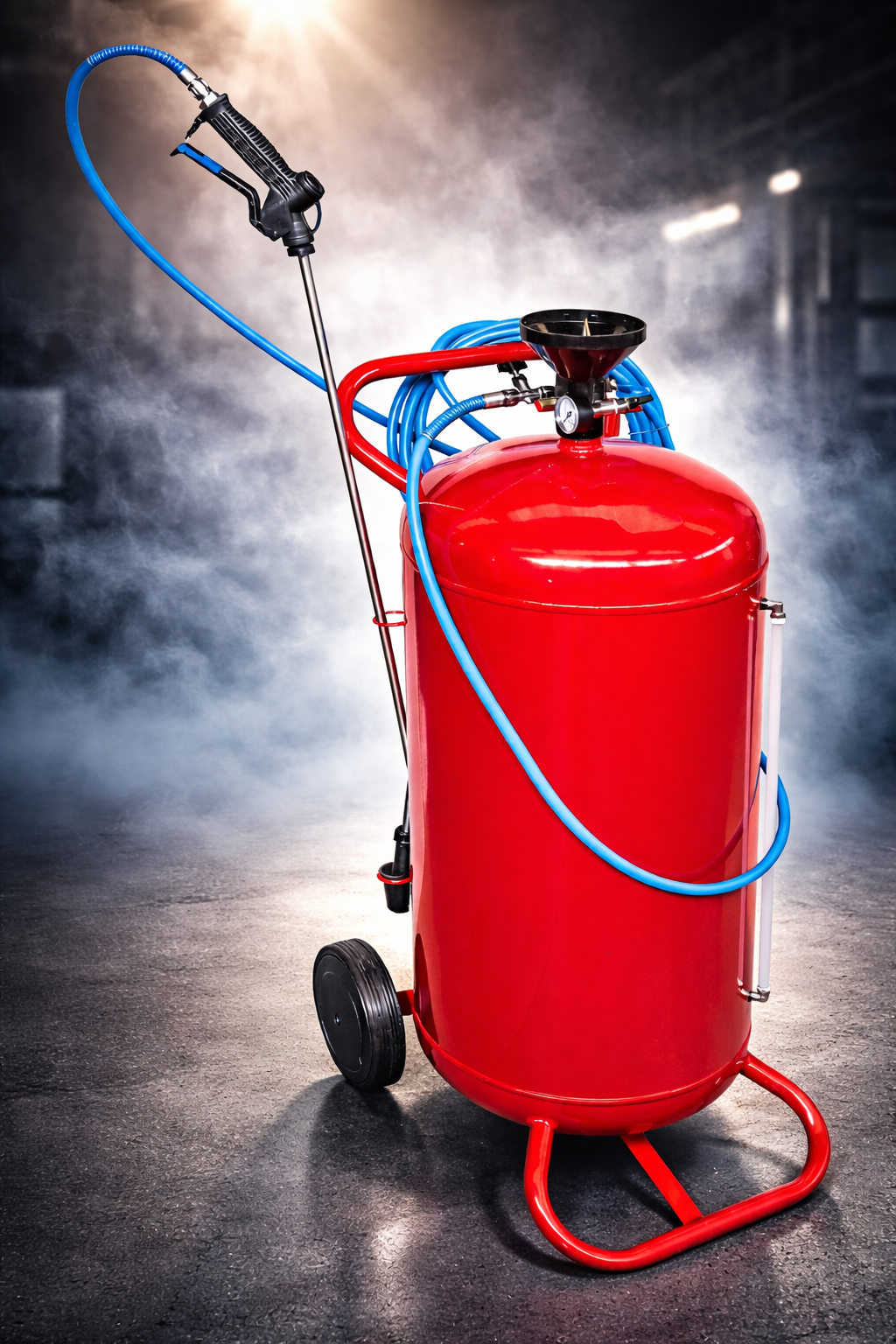
A pneumatic foamer is a professional piece of equipment that uses compressed air and diluted detergent to produce compact, uniform and clinging foam. It is designed to improve surface coverage, increase product contact time and make professional cleaning more effective.
In short: how it works
A pneumatic foamer works by combining compressed air, a detergent solution and a dedicated foam head. The pressurized tank pushes the diluted detergent through the lance, where air and liquid are mixed to create compact, visible and clinging foam for professional industrial cleaning.
1. Fill the tank
Water and detergent are mixed inside the tank according to the required dilution.
2. Connect compressed air
The compressor pressurizes the tank and pushes the detergent solution through the circuit.
3. Generate foam
The solution passes through the foam head, where air and liquid create compact foam.
4. Apply on surfaces
The clinging foam remains visible and increases detergent contact time on the surface.
For professional models, visit our industrial pneumatic foamers page.
What a pneumatic foamer is used for
A pneumatic foamer is used to apply detergent in foam form on vertical surfaces, equipment, vehicles, floors, systems and professional environments. Compared to traditional liquid application, foam clings better, runs less and allows the detergent to stay longer on the surface.
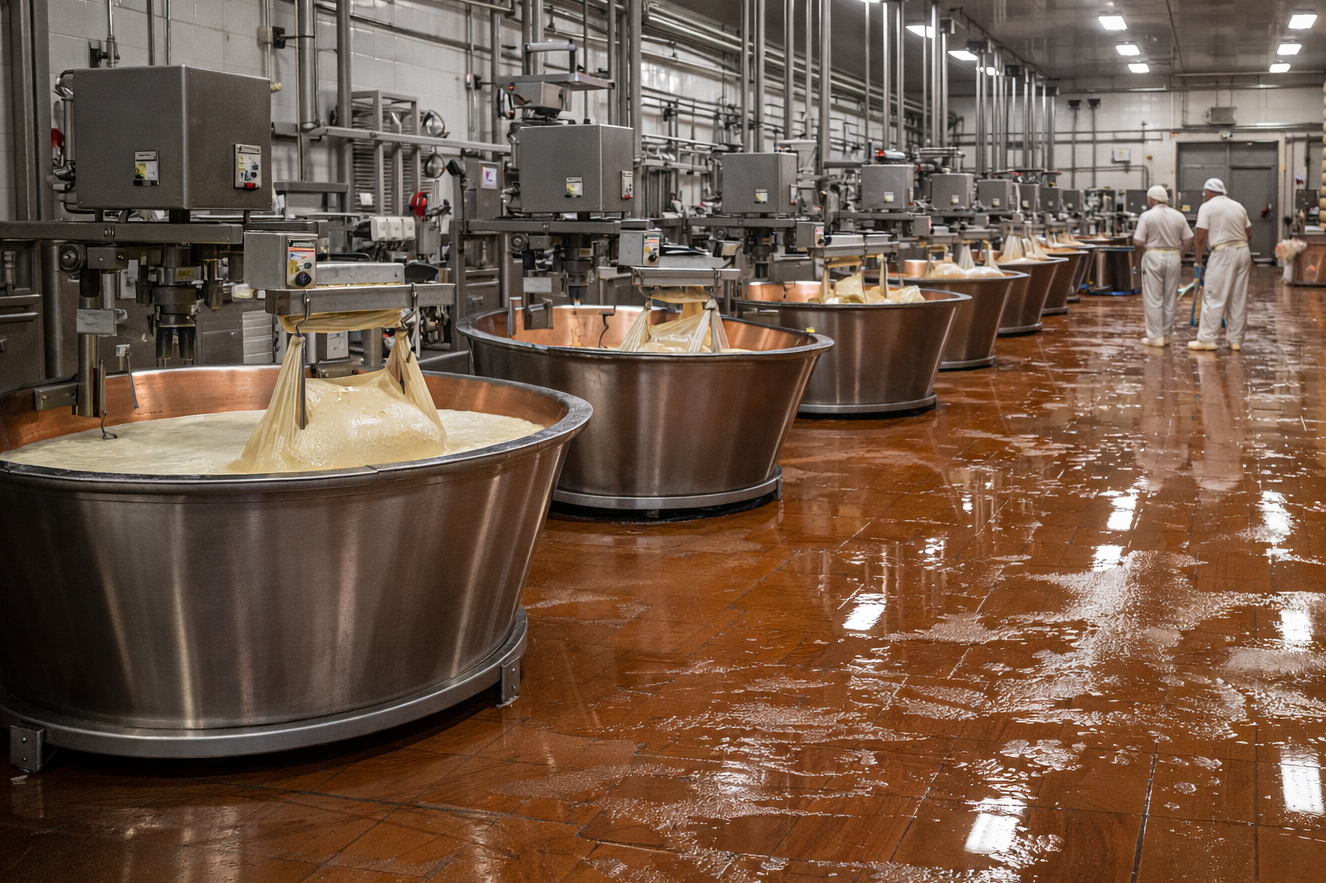
This helps improve the cleaning action and reduce product waste, especially in professional washing, food industry, livestock farming, industrial kitchens and the sanitizing of environments and vehicles.
Discover our professional pneumatic foamers, learn more about safety and PED certification, or compare foam and spray applications in our sprayer vs foamer guide.
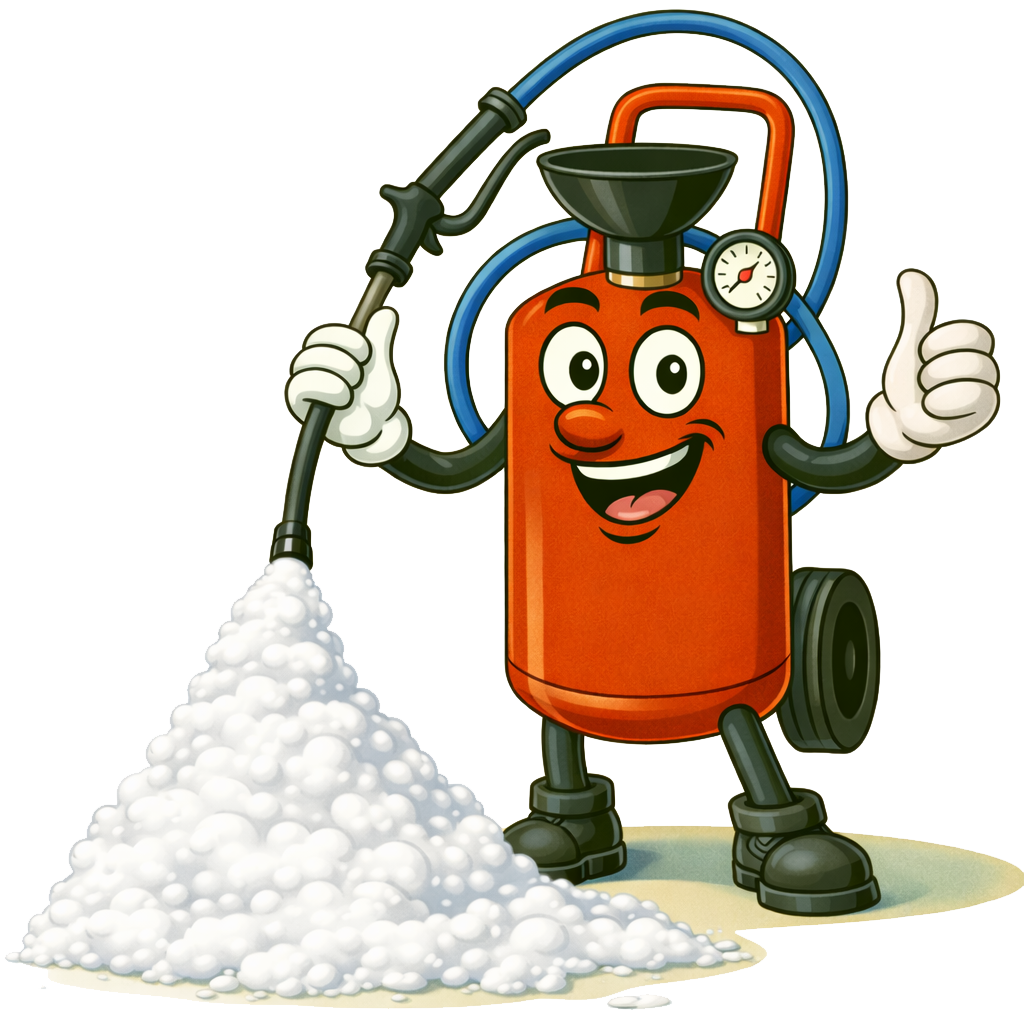
Foam adheres better, stays longer and allows you to visually control where the detergent has been applied.
Practical advantage: foam remains visible on the surface, helps the operator check coverage and improves detergent action time compared to simple liquid spraying.
Main components of a pneumatic foamer
| Component | Function | Why it matters |
|---|---|---|
| Tank | Contains the water and detergent solution. | It is the core of the machine and must be selected in the most suitable material for the application. |
| Air inlet | Connects the machine to the compressor or air line. | It allows the tank to be pressurized and activates operation. |
| Hose / lance | Directs the mixture towards the working area. | It helps distribute the foam accurately and conveniently. |
| Foam head | Turns the liquid jet into foam. | It is the element that determines foam quality, compactness and adhesion. |
| Valves and accessories | Control pressure, safety and flow regulation. | They contribute to reliability, safety and continuous operation. |
Why foam is effective
Better adhesion to surfaces
Foam clings better to vertical and irregular surfaces, reducing the fast run-off of detergent.
Longer contact time
By staying longer on the surface, the detergent can work better on dirt, grease and organic residues.
Visible and uniform coverage
The operator can clearly see where the product has been applied, with a more even distribution of the treatment.
Possible reduction in waste
Well-formed foam helps concentrate the product on the useful area, avoiding excessive dispersion and run-off.
Looking for a professional solution? Explore our complete range of industrial pneumatic foamers .
Foamer and sprayer: what is the difference?
The pneumatic sprayer applies the product in liquid form, creating a fine mist, suitable for low-density liquids and treatments where the foam effect is not required. The pneumatic foamer, on the other hand, is designed to obtain more compact and clinging foam, ideal when you want to increase detergent contact time on the surface.
In practice, the sprayer focuses on liquid distribution, while the foamer focuses on visible coverage, adhesion and product dwell time.
Where a pneumatic foamer is used


Discover our models
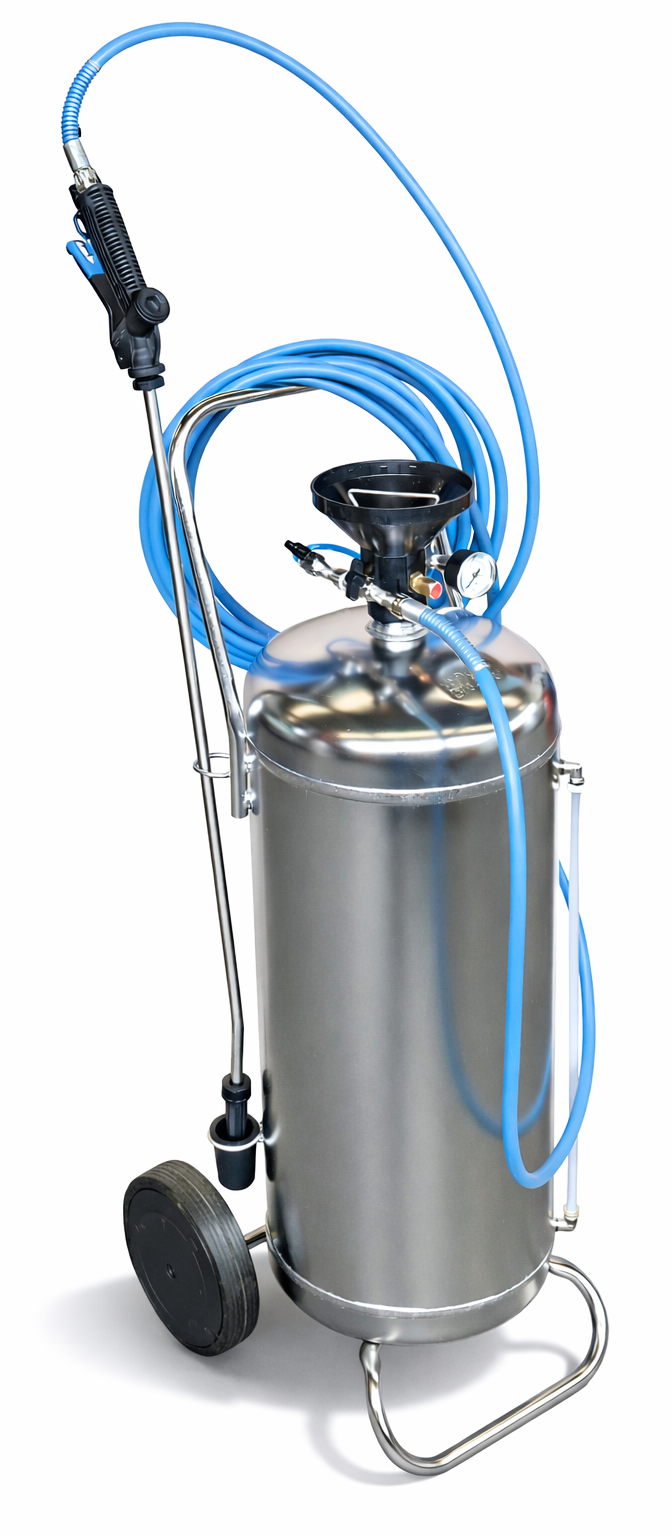
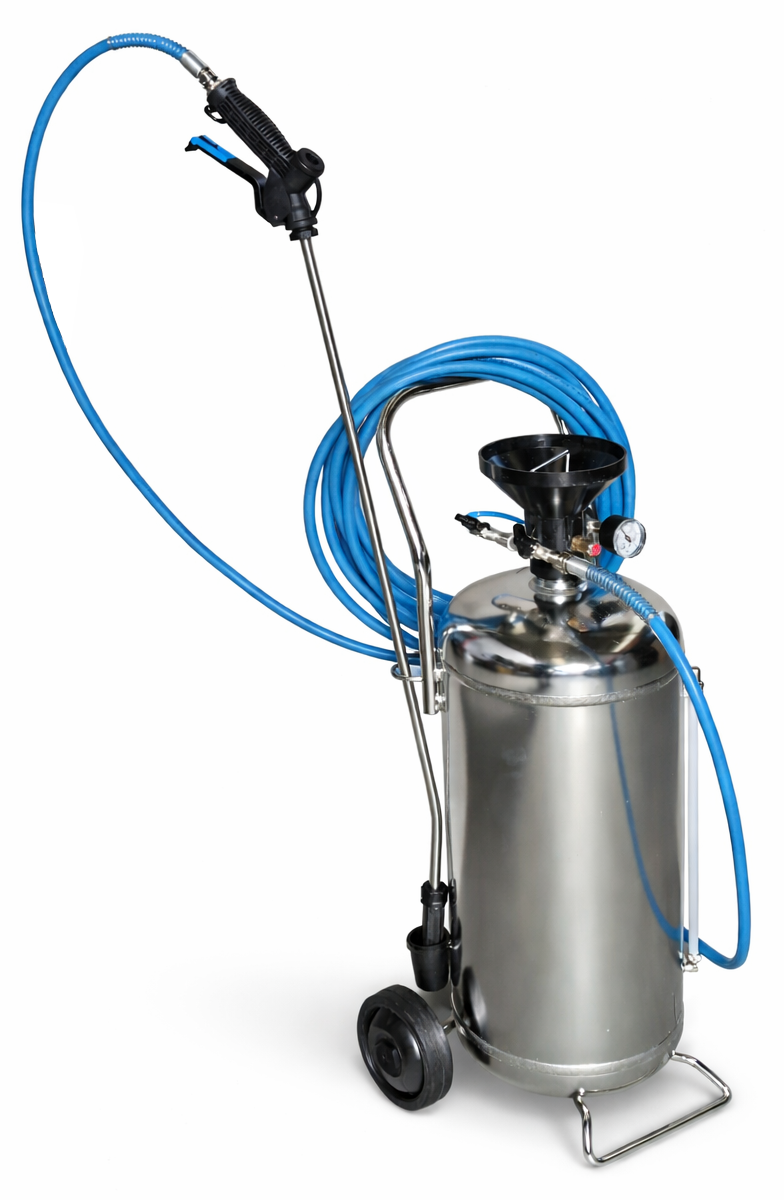
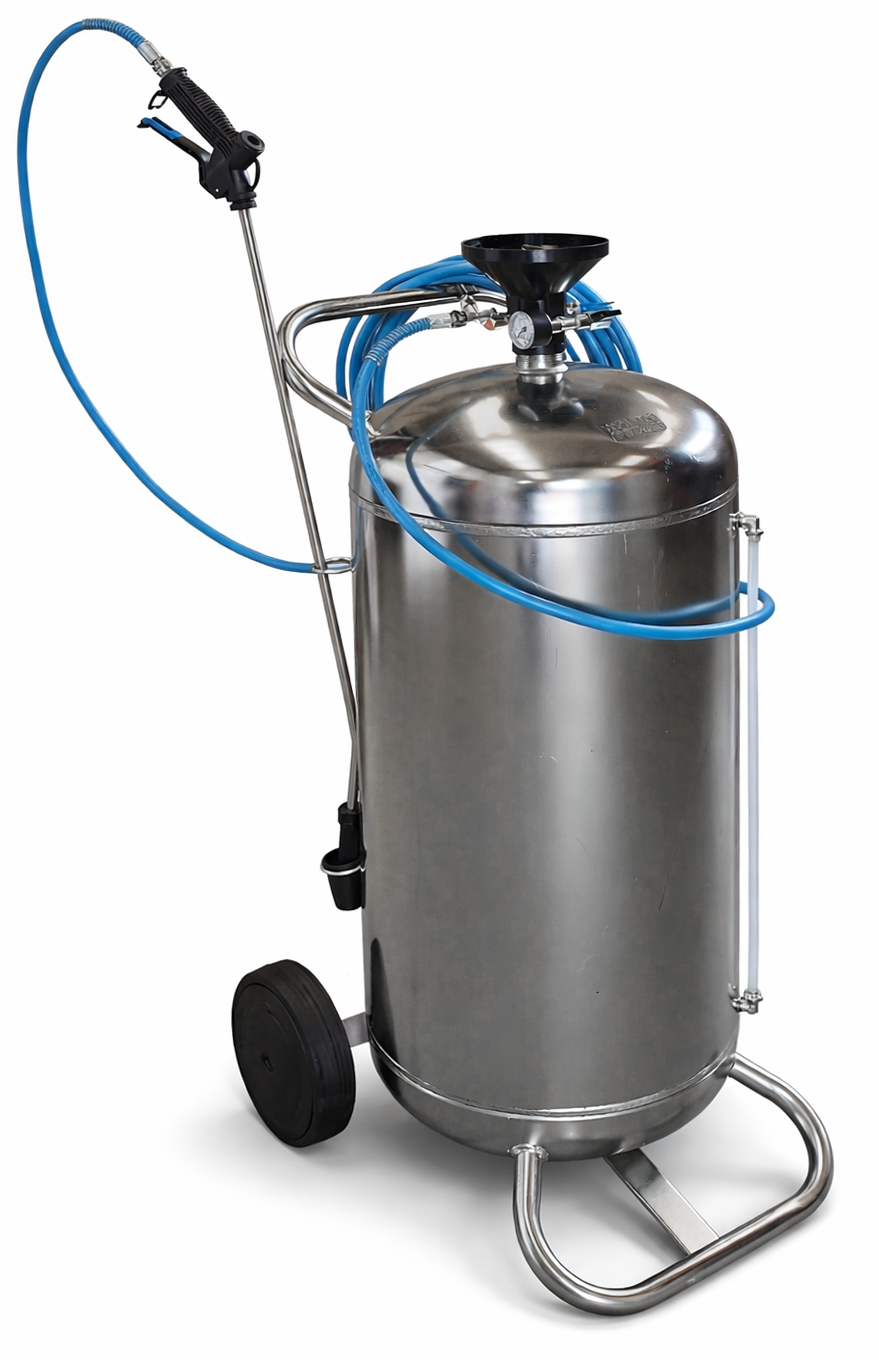
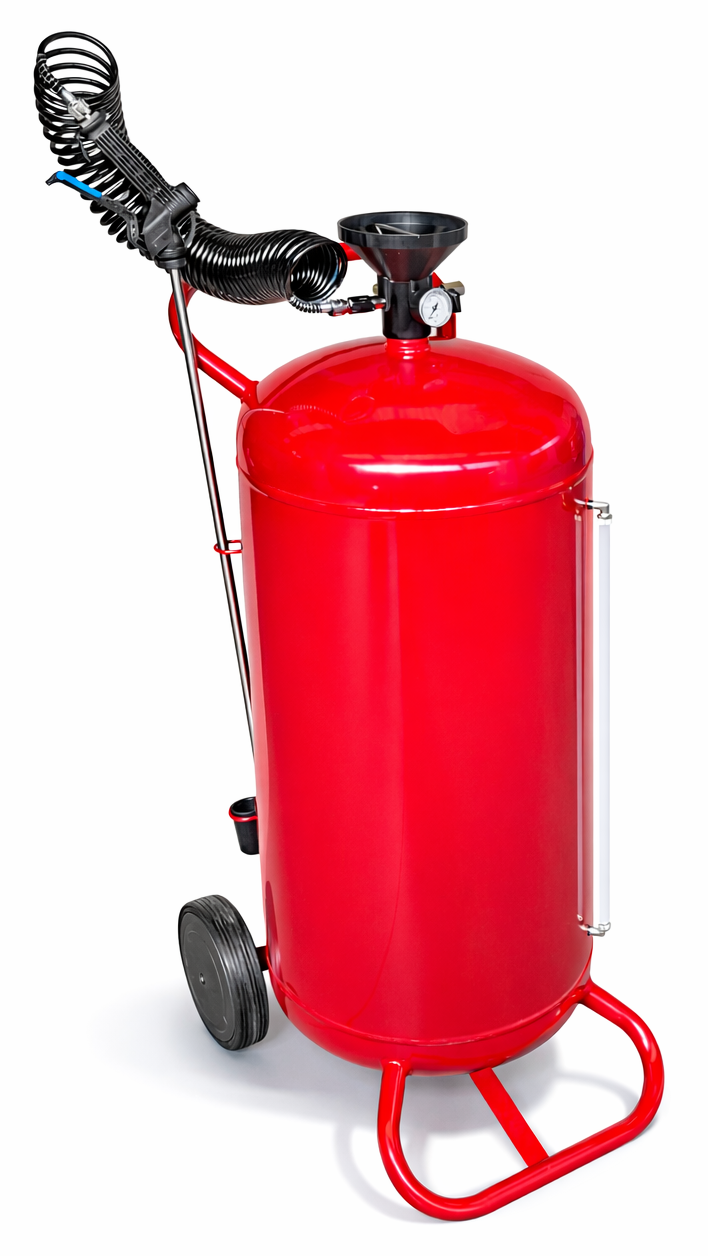

Want to understand which foamer to choose?
Tell us your field of use, the type of detergent and the frequency of use: we will help you identify the most suitable capacity and material for your application.
All Lanzoni foamers are manufactured in Italy and available in painted steel, stainless steel 304 and stainless steel 316L versions.